Building Smarter Civic Notifications: Inside the OneStopPGH Permit & Area Alert System
Cities generate an enormous amount of data every day – but too often, that data remains difficult for the public to access in a meaningful, timely way. At SymGEO, we focus on turning complex geospatial systems into intuitive, actionable tools.
The OneStopPGH Insights platform from the City of Pittsburgh is a strong example of that philosophy in action: a scalable, map-driven notification system that keeps residents, businesses, and stakeholders informed about permit activity – automatically.
From Static Data to Real-Time Awareness
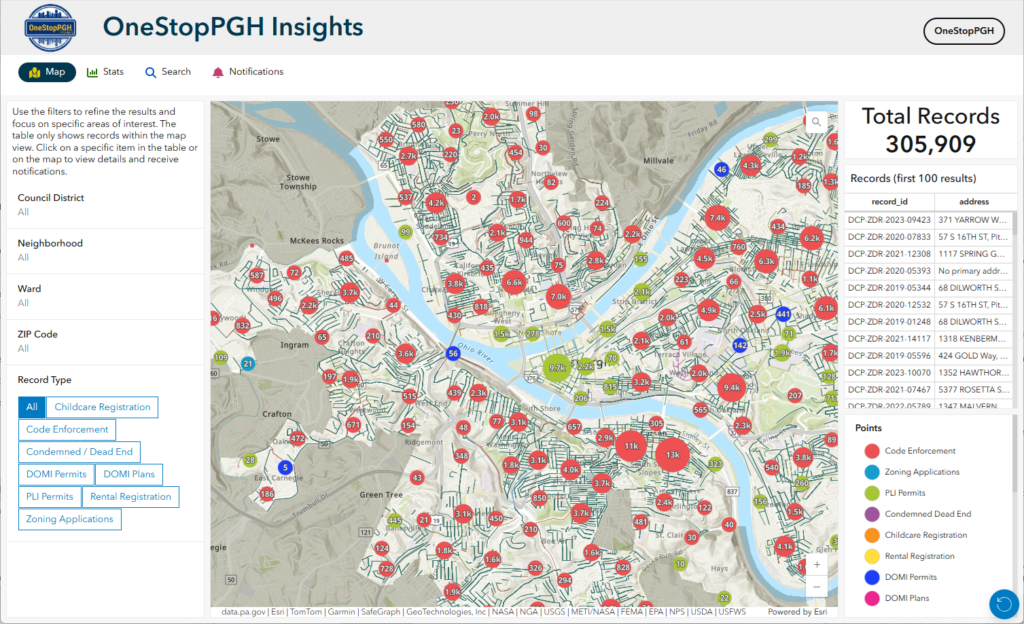
The request to SymGEO was straightforward: Give users the ability to track changes to permits or geographic areas they care about, without requiring them to constantly check a website.
The result is a self-service subscription system where users can:
- Follow a single permit
- Monitor activity within a defined area (neighborhoods, council districts, zip codes, etc.)
- Receive automated email updates when changes occur
- Easily unsubscribe at any time
All of this is delivered through a seamless, map-based experience.
“SymGEO has been an exceptional partner in helping us turn complex permitting data into something clear, accessible, and meaningful for our residents. The OneStopPGH notification system reflects exactly what we aim for as a City – modern, transparent tools that empower the public and reduce barriers to information. This solution not only enhances how our community stays informed, but also strengthens the foundation for how we deliver digital services moving forward.”
– Senior Manager – Applications, City of Pittsburgh
A Simple, Intuitive User Experience
The system was designed to feel natural for anyone already familiar with interactive maps.
Subscribing to a Single Permit
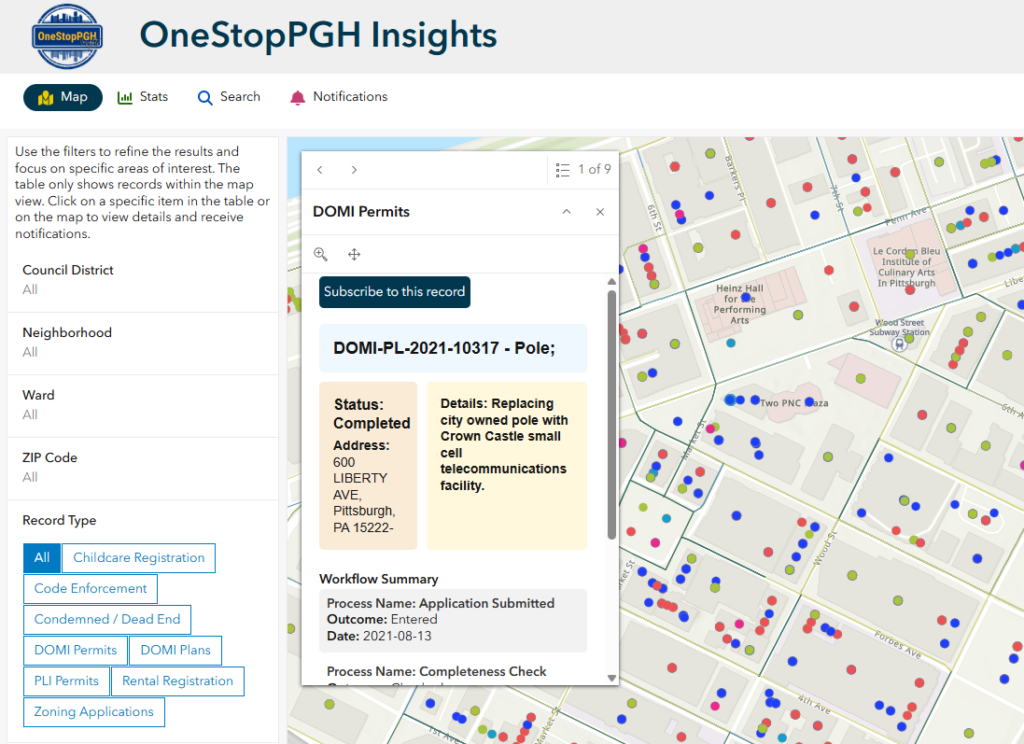
Users explore the public web app, click on a permit point, and subscribe directly from the map. Behind the scenes, a lightweight form captures their request, and they immediately receive a confirmation email with links to:
- View the permit in a live dashboard
- Unsubscribe with a single click
Subscribing to an Area of Interest
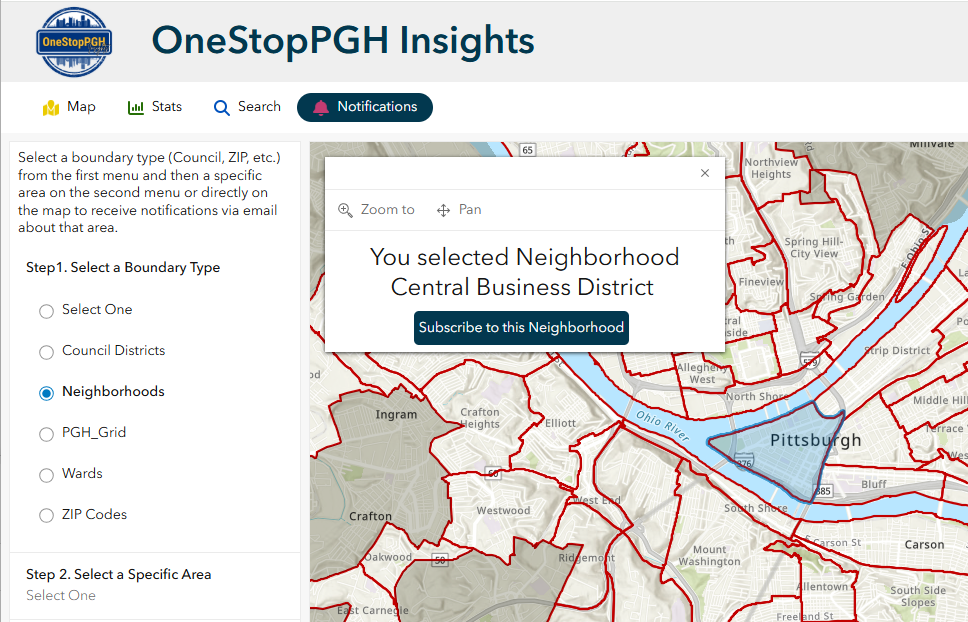
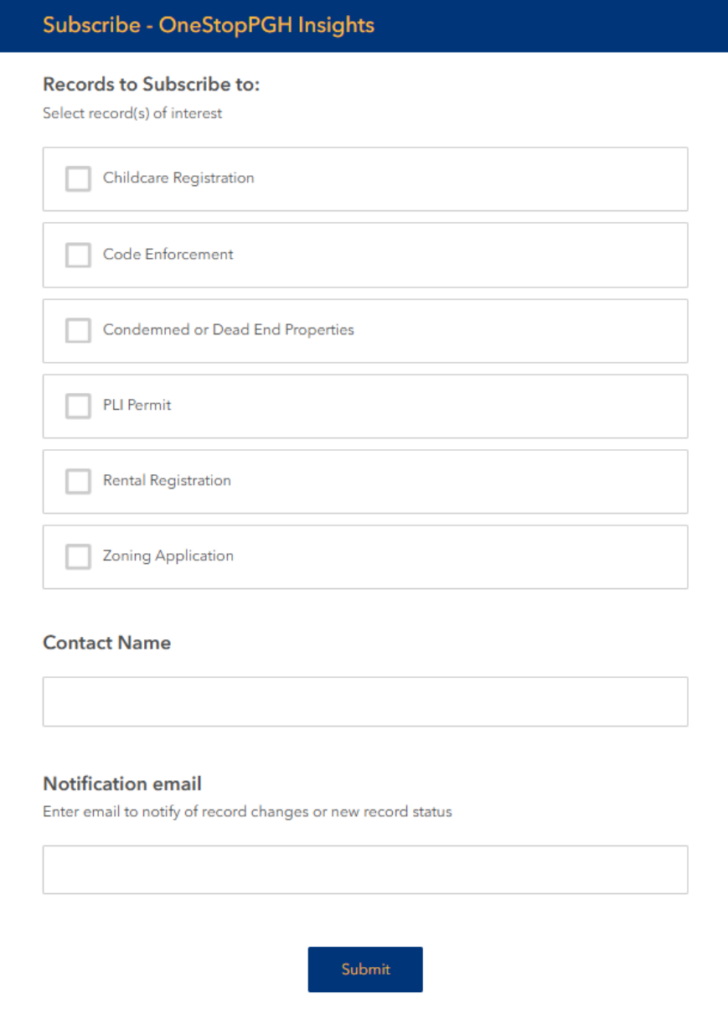
For broader monitoring, users can navigate to a notifications panel, select a geography (like a neighborhood or council district), and choose the types of records they care about. From there, the system handles the rest – tracking relevant changes and delivering updates automatically.
The Technology Behind the Experience
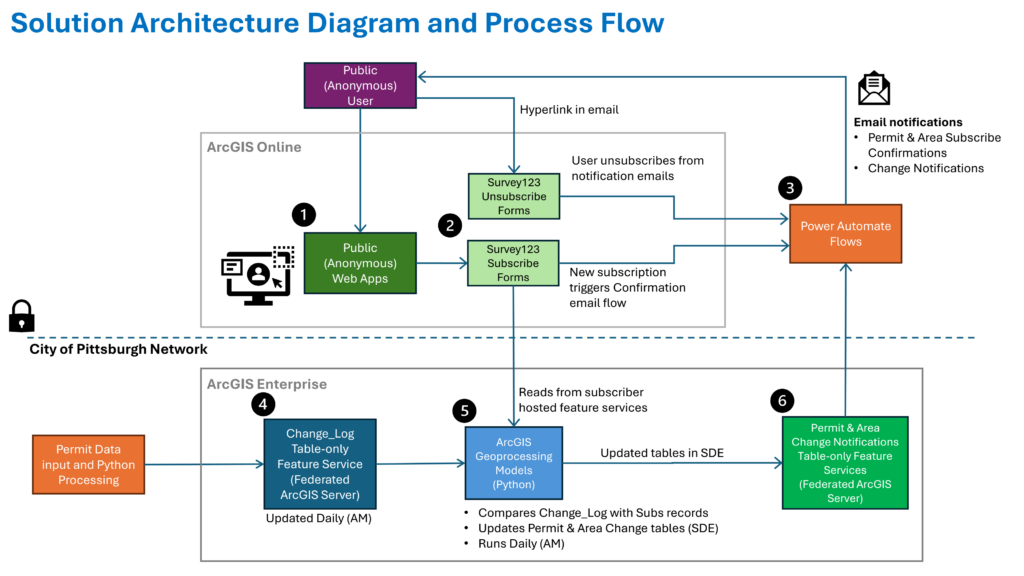
While the user experience is simple, the architecture behind it is intentionally robust and scalable.
The solution combines:
- ArcGIS Online for public-facing applications and user interaction
- ArcGIS Enterprise for authoritative data management and spatial processing
- Survey123 for structured subscription and unsubscribe workflows
- Microsoft Power Automate for orchestrating notifications
This hybrid approach allows the system to balance public accessibility with enterprise-grade reliability.
Why Architecture Matters
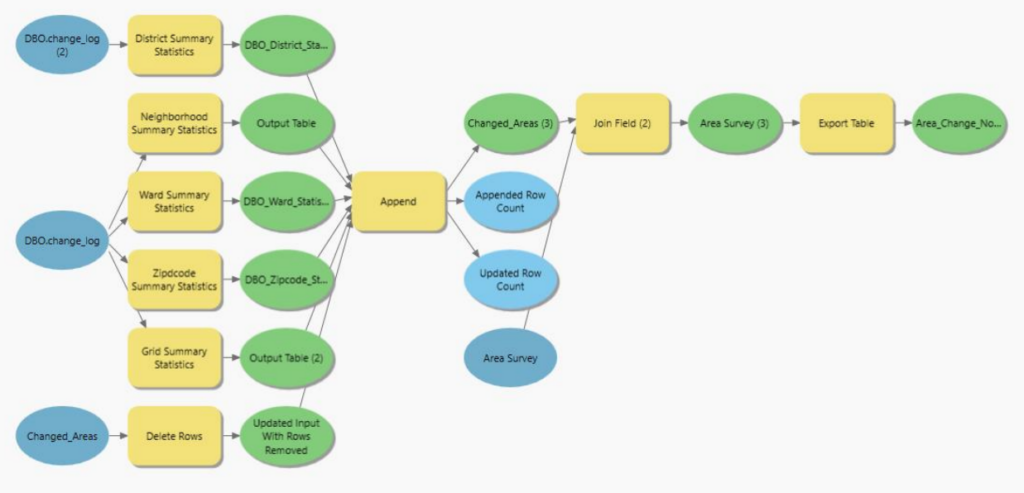
Rather than relying on real-time queries or tightly coupled systems, we designed the platform around precomputed change detection.
Each day:
- Source permit data is updated within the City’s GIS environment
- Automated models identify what has changed
- Changes are resolved to:
- Individual permits
- Subscribed geographic areas
- Results are written to staging tables
- Power Automate sends targeted email notifications
This approach avoids:
- Heavy real-time spatial queries
- API bottlenecks
- Performance instability during peak usage
And it ensures:
- Predictable system performance
- Easier troubleshooting
- Long-term maintainability
Built for Scale and Sustainability
A key design principle was keeping authoritative processing inside the City’s infrastructure while allowing public interaction to remain lightweight and anonymous.
The system is:
- Decoupled – user actions don’t directly trigger heavy backend processing
- Auditable – all notification logic is traceable through staging tables
- Maintainable – clear separation between GIS, automation, and user interfaces
Operationally, the platform is supported by:
- Daily automated data pipelines
- Scheduled change detection scripts
- Monitoring workflows for subscriptions and system health
Real Impact for Cities and Communities
The OneStopPGH notification system transforms how users engage with civic data:
- Residents stay informed about development in their neighborhoods
- Businesses can monitor permits affecting operations or investments
- City staff reduce manual communication overhead
Most importantly, it creates a transparent, proactive communication channel between local government and the public.
A Blueprint for Modern Geospatial Engagement
This project demonstrates a repeatable pattern for cities looking to modernize how they share information:
- Start with authoritative GIS data
- Add intuitive, map-based interaction
- Use automation to deliver timely insights
- Design for scale from day one
At SymGEO, we believe the future of geospatial isn’t just about maps – it’s about delivering the right information to the right people at the right time. Contact Us to start a conversation today about your unique project requirements.